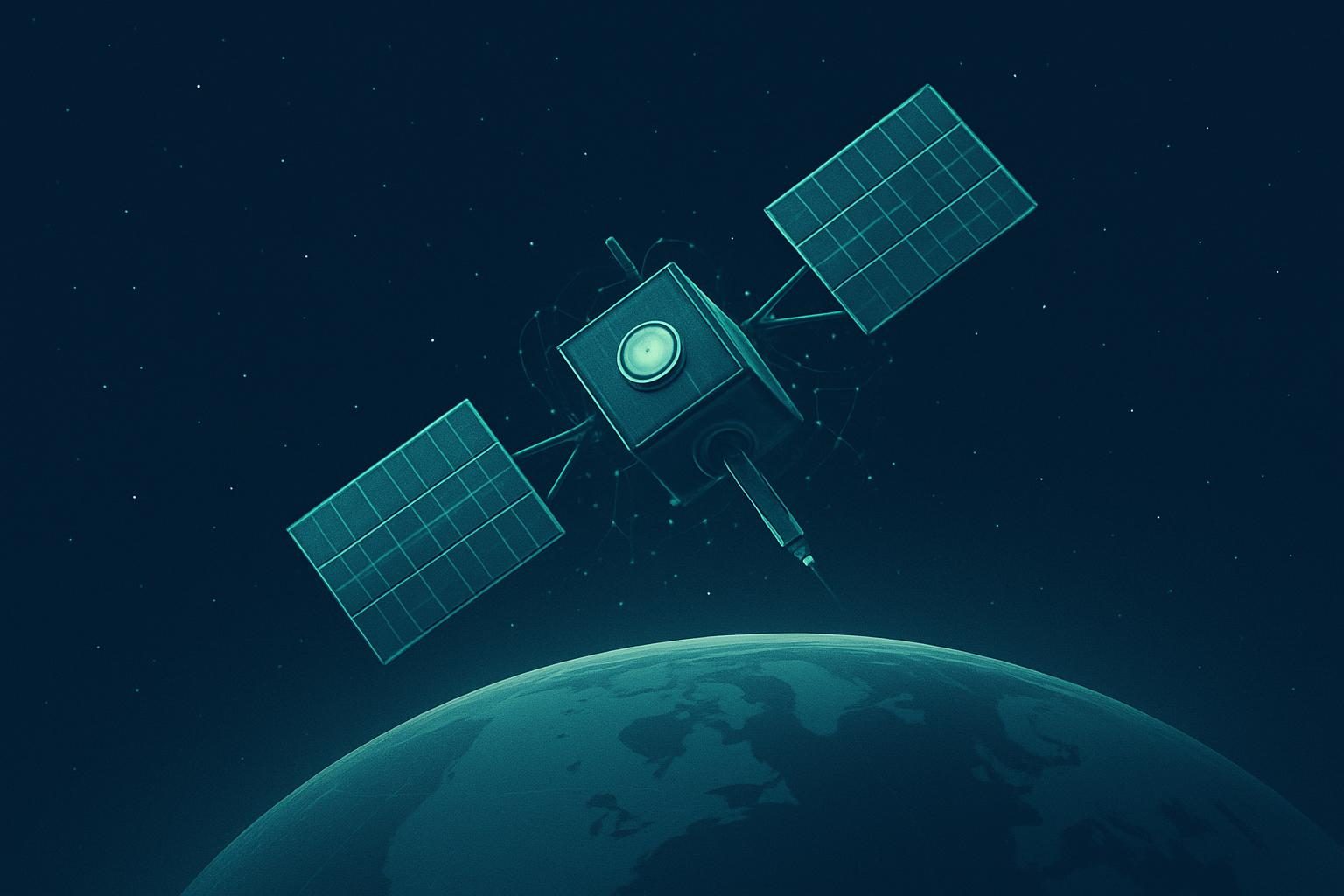
On October 1, 2026, Google Research launched a prototype satellite as part of Project Suncatcher, a long-term initiative aiming to explore powering advanced artificial intelligence (AI) computing hardware in space. The satellite carries data center-class Tensor Processing Units (TPUs) designed to operate in the harsh conditions of orbit.
Over the subsequent weeks, the team completed comprehensive commissioning tasks, including powering up the host computer and TPU trays onboard the satellite. Early machine learning tests were conducted to verify system readiness and functionality.
The project reached a key "Hello World" milestone when the satellite’s onboard Gemma 4 open AI model was sent its first uplinked prompt during a pass over Svalbard, Norway. The model generated a haiku about its experience in space, which was successfully downlinked to ground teams, confirming the satellite’s capability to perform AI inference in orbit.
Following this initial success, further prompts were tested including space-themed limericks and telemetry queries, the latter providing technical status updates on the satellite’s systems. These tests provide valuable data on both AI performance and satellite health in real-time space environments.
A critical focus of upcoming tests will be evaluating the TPUs’ performance under thermal stress and radiation exposure unique to the space environment. Understanding these factors is essential to ensure reliable AI computations for operational scenarios beyond Earth's atmosphere.
Google’s work with TPUs in orbit is a foundational step towards their goal of deploying twin interconnected satellites by 2027, which would facilitate more complex AI workloads and data processing capabilities directly in space.
The Project Suncatcher prototype proving effective AI computation on orbiting hardware is a notable advance. However, challenges remain in ensuring the durability and resilience of AI silicon chips against space conditions over longer mission durations.
Successfully demonstrating stable AI processing in orbit will open opportunities for real-time satellite data analysis, autonomous spacecraft operations, and unprecedented AI-powered missions, highlighting the significance of this space-computing moonshot.
Source & further reading
We’ve received our first response from the Project Suncatcher prototype satellite. ↗Source published 2026-10-30. This report was prepared with AI assistance from the linked primary-source material. Claims and limitations should be checked against the original announcement or research.