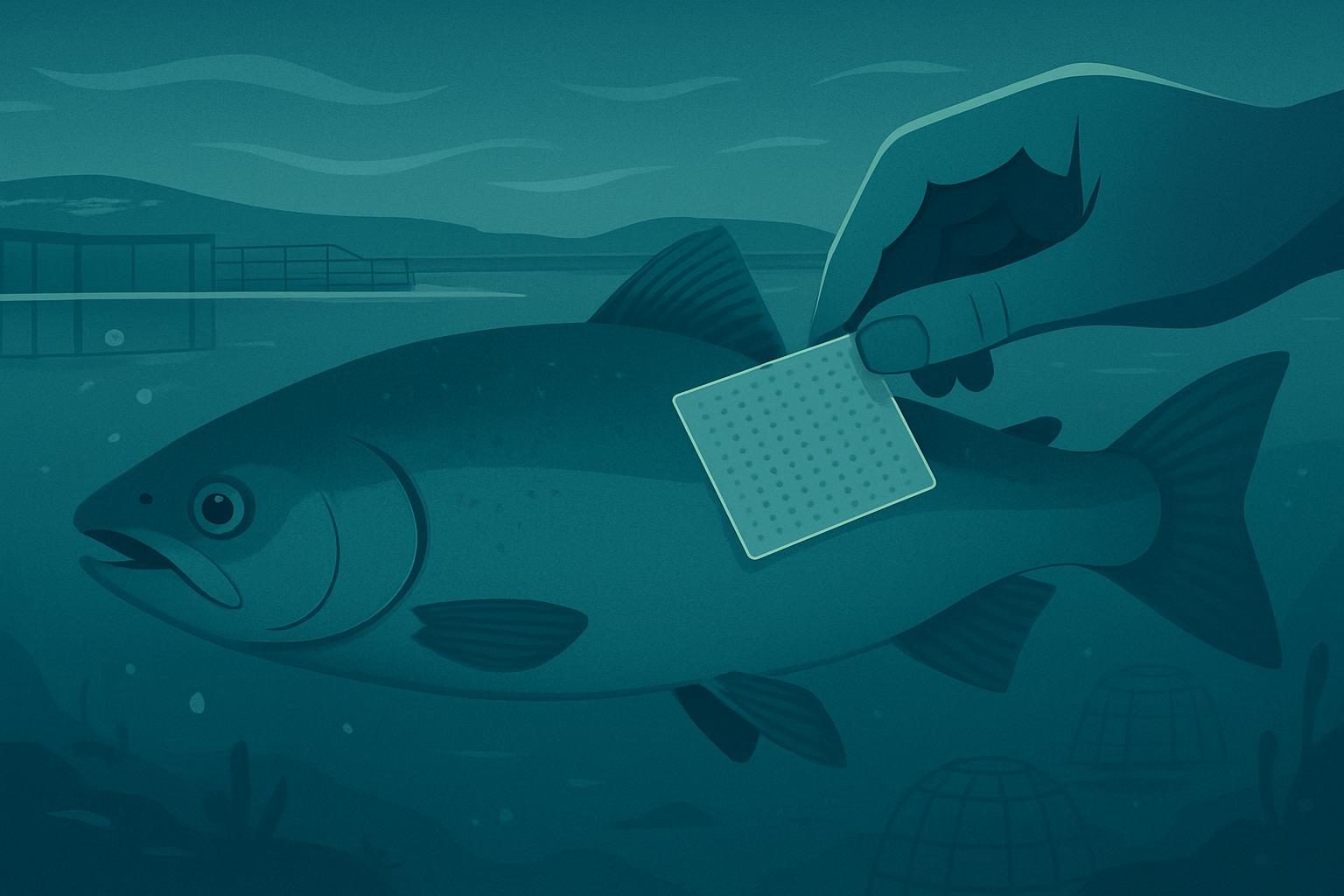
Aquaculture is a growing global food source but remains vulnerable to disease outbreaks that can cause significant losses. Vaccinating fish effectively is challenging, as current methods involve sedating fish, removing them from water, and injecting them with metal needles—a laborious, stressful, and risky process for both fish and workers.
MIT engineers, collaborating with the U.S. Department of Agriculture, have designed a novel vaccine delivery system using biodegradable silk microneedles coated with a thin layer of water-resistant shellac. This innovation allows the microneedles to penetrate fish skin and remain attached underwater before decomposing, releasing the vaccine gradually.
The silk used in the microneedles is food-grade and safe for human consumption, ensuring safety for both fish and consumers. The shellac coating acts as a moisture barrier, preventing premature dissolution in water, which addresses previous limitations of silk microneedles that dissolved too quickly underwater.
In tests with rainbow trout, these microneedles successfully delivered bacterial and DNA vaccines to fish as small as 1 to 2 grams. This early-life vaccination is critical because traditional needle methods typically only work well for fish over 30 grams, leaving juveniles vulnerable during key growth phases.
The system allows for controlled vaccine release times ranging from 15 minutes up to 24 hours, adaptable to different therapeutic needs. Moreover, the microneedles demonstrated stability in dry storage for up to four weeks without refrigeration, which is advantageous for rural aquaculture settings lacking cold chain infrastructure.
While promising, the researchers acknowledge additional development is needed for large-scale farm integration. The technology aims to reduce labor intensity, lower the risk of cross-contamination and worker injuries, and improve overall fish welfare, contributing to sustainable aquaculture and food security.
Supported by MIT’s Abdul Latif Jameel Water and Food Systems Lab and the USDA, this advancement represents a significant step toward more efficient, scalable vaccination methods in fish farming, addressing critical challenges faced by producers worldwide.
Source & further reading
MIT engineers design a safer, more efficient vaccination system for farmed fish ↗Source published 2026-11-02. This report was prepared with AI assistance from the linked primary-source material. Claims and limitations should be checked against the original announcement or research.